Cost, aesthetics and logistics differences between rigid boxes and corrugated cartons — which is right for your operation?
Two packaging categories are frequently confused in B2B procurement: rigid boxes and corrugated cartons. Both are called "boxes," but they differ fundamentally in production technology, intended use and cost structure. This guide helps clarify which is right for your operation.
What Is a Rigid Box?
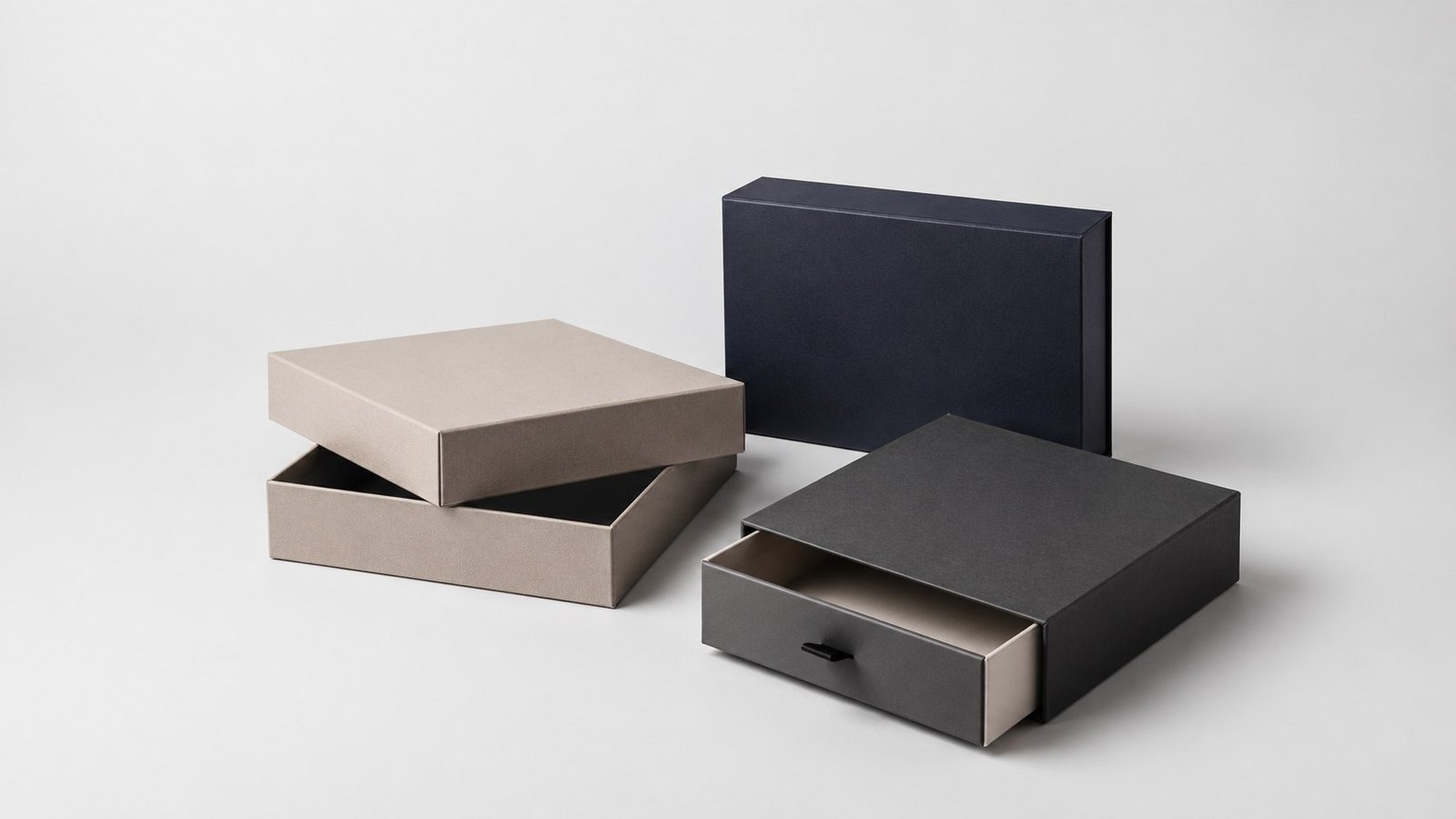
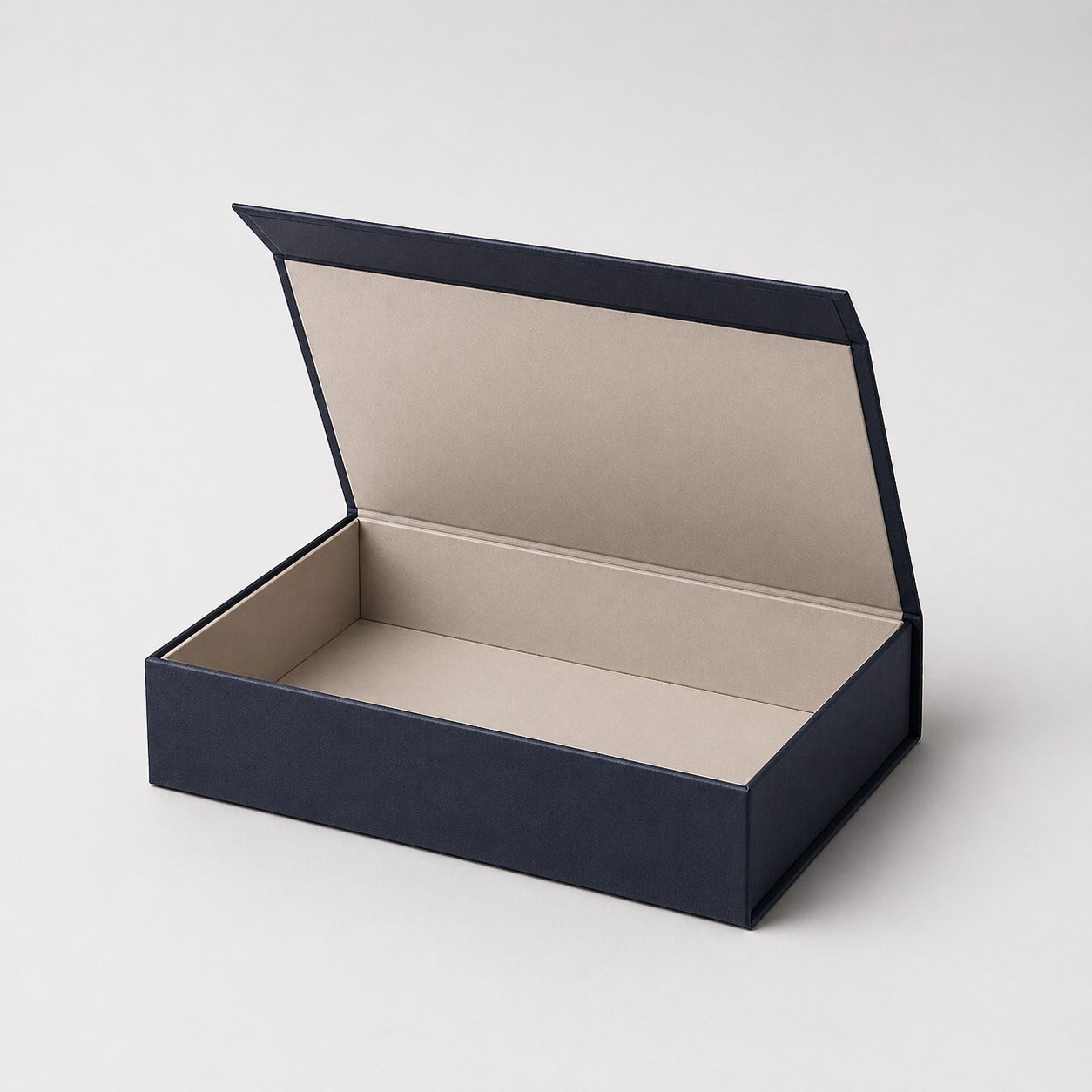
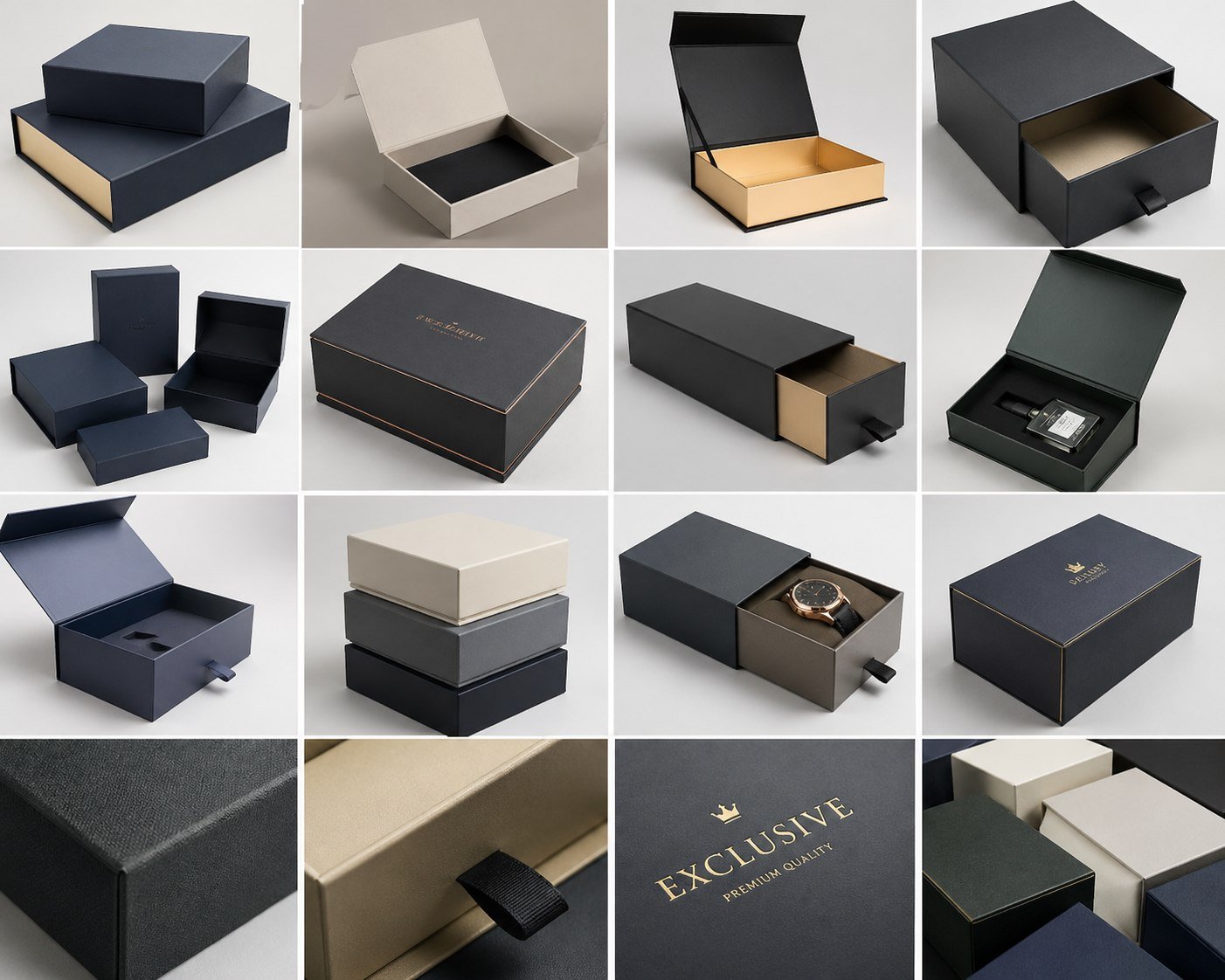
A rigid box is a structural packaging format made from 2–4 mm thick greyboard wrapped in fabric, paper or synthetic leather. Durable, reusable and premium in feel, rigid boxes are the standard choice for gift, jewelry, cosmetics and corporate packaging.
Key characteristics:
- Covering options: fabric, matte or gloss paper, PU leather, velvet
- Print techniques: offset, digital, emboss, deboss, gold or silver foil
- Minimum order quantity: 50 units
- Lifespan: long-term, reusable
- Target segments: gift, jewelry, cosmetics, electronics accessories, corporate
What Is a Corrugated Carton (RSC/FEFCO)?
A corrugated carton is a single-use shipping package made from fluted paperboard. Its high stack strength, low unit cost and easy stacking make it the standard choice for logistics, warehousing and distribution operations.
Key characteristics:
- Material: single-wall or double-wall corrugated board
- Standards: RSC, FEFCO 0201 and derivatives
- Print: flexographic or digital (limited colour range)
- Minimum order quantity: typically 100 units or more
- Target segments: logistics, warehousing, bulk shipment, e-commerce fulfilment
Decision Criteria
Four questions determine the right choice for B2B buyers:
1. Will the end user see the packaging? If the box will be displayed on a shelf, in a showcase or presented as a gift, a rigid box is required. A corrugated carton cannot carry that perception.
2. Is the purpose purely transit? If the box will be discarded once the product reaches the warehouse or customer, a corrugated carton is sufficient and offers significant cost savings.
3. Is there a budget constraint? Corrugated cartons cost 5–10x less per unit than rigid boxes. However, they carry no brand equity.
4. Is long-term storage required? Rigid boxes hold their shape and structure over time. Corrugated board can weaken under humidity and repeated stacking.
Comparison Table
Criterion | Rigid Box | Corrugated Carton
Unit cost | Medium–High | Low
Appearance/prestige | Premium | Standard
Reusability | Yes | No
MOQ | 50 units | 100+ units
Print quality | Very high | Moderate
Moisture resistance | High | Moderate
Primary use | Presentation/gift | Shipping/logistics
Emsa Pack Specialises in Rigid Boxes
Emsa Pack manufactures rigid boxes for the corporate and premium segment. If your operation requires corrugated cartons, we can point you toward the right suppliers. For rigid box needs, contact us directly — production starts from a minimum of 50 units.
What Is a Rigid Box?
A rigid box is a structural packaging format made from 2–4 mm thick greyboard wrapped in fabric, paper or synthetic leather. Durable, reusable and premium in feel, rigid boxes are the standard choice for gift, jewelry, cosmetics and corporate packaging.
Key characteristics:
- Covering options: fabric, matte or gloss paper, PU leather, velvet
- Print techniques: offset, digital, emboss, deboss, gold or silver foil
- Minimum order quantity: 50 units
- Lifespan: long-term, reusable
- Target segments: gift, jewelry, cosmetics, electronics accessories, corporate
What Is a Corrugated Carton (RSC/FEFCO)?
A corrugated carton is a single-use shipping package made from fluted paperboard. Its high stack strength, low unit cost and easy stacking make it the standard choice for logistics, warehousing and distribution operations.
Key characteristics:
- Material: single-wall or double-wall corrugated board
- Standards: RSC, FEFCO 0201 and derivatives
- Print: flexographic or digital (limited colour range)
- Minimum order quantity: typically 100 units or more
- Target segments: logistics, warehousing, bulk shipment, e-commerce fulfilment
Decision Criteria
Four questions determine the right choice for B2B buyers:
1. Will the end user see the packaging? If the box will be displayed on a shelf, in a showcase or presented as a gift, a rigid box is required. A corrugated carton cannot carry that perception.
2. Is the purpose purely transit? If the box will be discarded once the product reaches the warehouse or customer, a corrugated carton is sufficient and offers significant cost savings.
3. Is there a budget constraint? Corrugated cartons cost 5–10x less per unit than rigid boxes. However, they carry no brand equity.
4. Is long-term storage required? Rigid boxes hold their shape and structure over time. Corrugated board can weaken under humidity and repeated stacking.
Comparison Table
Criterion | Rigid Box | Corrugated Carton
Unit cost | Medium–High | Low
Appearance/prestige | Premium | Standard
Reusability | Yes | No
MOQ | 50 units | 100+ units
Print quality | Very high | Moderate
Moisture resistance | High | Moderate
Primary use | Presentation/gift | Shipping/logistics
Emsa Pack Specialises in Rigid Boxes
Emsa Pack manufactures rigid boxes for the corporate and premium segment. If your operation requires corrugated cartons, we can point you toward the right suppliers. For rigid box needs, contact us directly — production starts from a minimum of 50 units.