Color selection, print techniques and lead time planning to bring your brand identity to the straw.
Branded straws are no longer just an aesthetic choice — they are one of the lowest-cost touchpoints for on-table brand visibility. Every straw your customer touches is a paid advertising surface. This guide covers the full journey from color selection to packaging for B2B buyers sourcing custom frozen straws.
Pantone vs. CMYK: Choosing the Right Color System
Two primary color methods apply in straw production. Spot color (Pantone reference) embeds the hue directly into the raw material or print ink. This approach guarantees batch-to-batch consistency and is ideal for single- or dual-color designs. When you order with a Pantone number, you can hold the supplier accountable to a measurable standard.
CMYK printing is used when full-color artwork or gradients are required, but be aware that photorealistic gradients are practically limited on frozen straws. There is also an important distinction between raw material color (the pigment mixed into the plastic itself, coloring the entire straw body) and surface print color (applied to the surface, which carries a risk of fading under sunlight or friction).
Print Techniques
Flexographic printing is the industry standard for high-volume frozen straw orders. It supports 1 to 6 colors, keeps unit cost low at scale, and is the go-to method for orders above 50,000 units.
Silkscreen printing suits smaller runs and special-effect applications, but per-unit cost is higher than flexo. Digital printing remains limited in straw manufacturing — suitable for small pilot runs but not standard practice in large-scale B2B procurement.
Proofing: The Step You Cannot Skip
The most common source of dissatisfaction in supplier relationships is skipping the color proof and first-batch sample approval. A proper proofing workflow has three stages:
Stage one: digital proof — approve color references and design placement on screen.
Stage two: physical color proof — a small printed sample using production inks.
Stage three: first-batch sample — physical approval of 50–100 units from the actual production run.
Moving to full-scale production without completing all three stages risks thousands of units of defective stock.
Stock Colors vs. Custom Colors
Stock colors — red, blue, yellow, black, and clear — are available at lower MOQs. A custom Pantone color typically requires a minimum of 50,000 to 100,000 units. If your brand color is non-negotiable, plan this volume at the start of the season to secure lead time and cost advantages.
Packaging Options
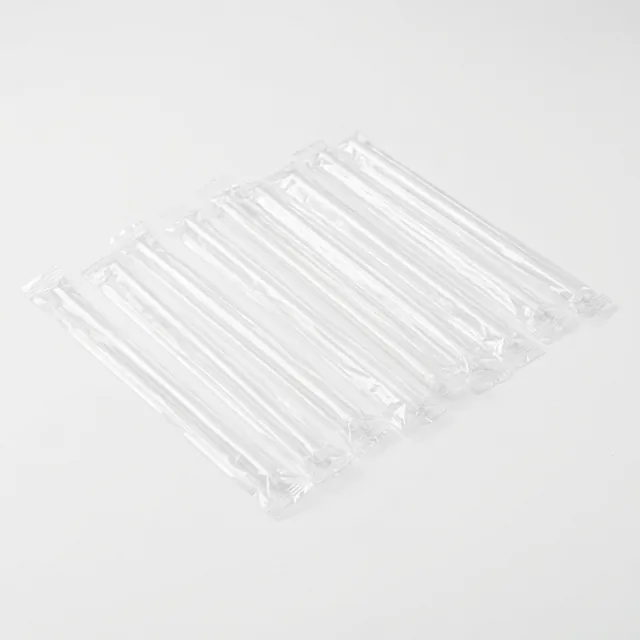
Straws are available individually wrapped (with sleeve) or in bulk (without sleeve). Standard pack sizes are 500 or 1,000 units. If food service hygiene standards require individual wrapping, specify this in your brief from the start.
Request a quote from Emsa Pack within 24 hours for custom-color and printed frozen straws.
Pantone vs. CMYK: Choosing the Right Color System
Two primary color methods apply in straw production. Spot color (Pantone reference) embeds the hue directly into the raw material or print ink. This approach guarantees batch-to-batch consistency and is ideal for single- or dual-color designs. When you order with a Pantone number, you can hold the supplier accountable to a measurable standard.
CMYK printing is used when full-color artwork or gradients are required, but be aware that photorealistic gradients are practically limited on frozen straws. There is also an important distinction between raw material color (the pigment mixed into the plastic itself, coloring the entire straw body) and surface print color (applied to the surface, which carries a risk of fading under sunlight or friction).
Print Techniques
Flexographic printing is the industry standard for high-volume frozen straw orders. It supports 1 to 6 colors, keeps unit cost low at scale, and is the go-to method for orders above 50,000 units.
Silkscreen printing suits smaller runs and special-effect applications, but per-unit cost is higher than flexo. Digital printing remains limited in straw manufacturing — suitable for small pilot runs but not standard practice in large-scale B2B procurement.
Proofing: The Step You Cannot Skip
The most common source of dissatisfaction in supplier relationships is skipping the color proof and first-batch sample approval. A proper proofing workflow has three stages:
Stage one: digital proof — approve color references and design placement on screen.
Stage two: physical color proof — a small printed sample using production inks.
Stage three: first-batch sample — physical approval of 50–100 units from the actual production run.
Moving to full-scale production without completing all three stages risks thousands of units of defective stock.
Stock Colors vs. Custom Colors
Stock colors — red, blue, yellow, black, and clear — are available at lower MOQs. A custom Pantone color typically requires a minimum of 50,000 to 100,000 units. If your brand color is non-negotiable, plan this volume at the start of the season to secure lead time and cost advantages.
Packaging Options
Straws are available individually wrapped (with sleeve) or in bulk (without sleeve). Standard pack sizes are 500 or 1,000 units. If food service hygiene standards require individual wrapping, specify this in your brief from the start.
Request a quote from Emsa Pack within 24 hours for custom-color and printed frozen straws.